

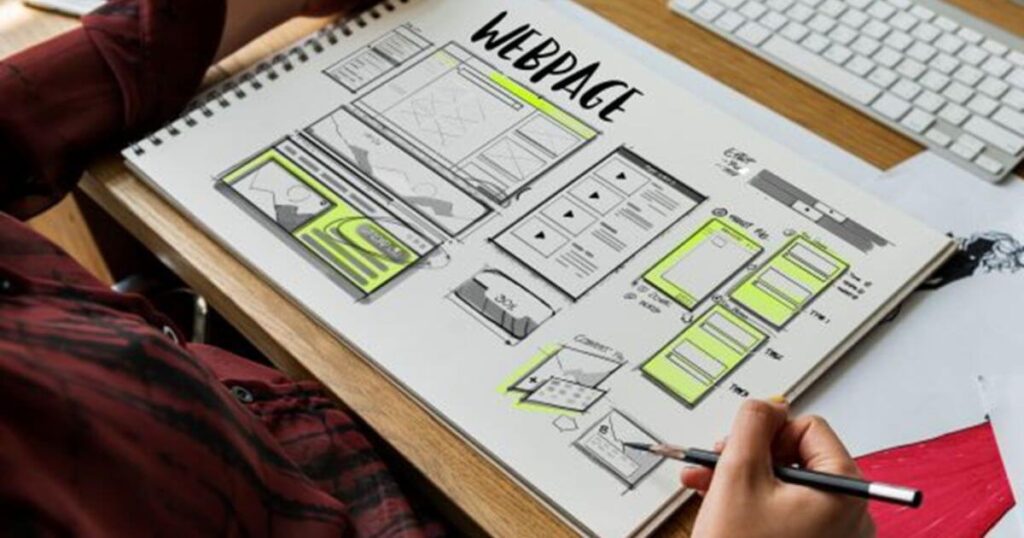
Your website is the public face of your business. Often, your website gives potential clients and customers their first impression of you and what you have to offer. There are plenty of templates out there for building a basic website, but a custom website allows you to create a unique, functional, accessible, professional, high-quality website that truly represents your brand and helps you stand out in a crowded digital marketplace.
Whether you have the expertise to do custom web development yourself or choose to partner with a full-service company such as InnoVision Marketing Group, there are certain elements you’ll want to include. Features like a responsive design, security measures, and compliance with the ADA will help you ensure your customers have the best possible user experience and that your website presents your business in the best possible light.
Keep reading to learn what website essentials to include for effective custom web development.
Table of Contents
Responsive Design
One of the most critical elements of custom web development is responsive design. This design approach ensures your website looks great and functions effectively regardless of the device visitors use, whether it’s a desktop computer, tablet, mobile phone, laptop, or Wi-Fi-connected TV.
Using fluid grids, flexible images, and media queries, web designers can make sure your website’s layout, orientation, images, and functions automatically adapt to different screen sizes so that your users don’t have to zoom in and out, pinch images, or struggle with misplaced text or clunky navigation.
Responsive web design enhances user experience, which then reduces bounce rates since users are more likely to continue engaging with your content instead of leaving your website in frustration. Responsive web design also improves mobile search engine optimization (SEO) because Google prioritizes mobile-first indexing.
Fast Load Times
No one likes waiting. Most people expect website pages to load within 2 or 3 seconds and might be tempted to click away from your site if it takes longer. This could affect your user engagement and conversion rates. In addition, search engines use page speed as a ranking factor, so a slower load time could also negatively impact your SEO.
To optimize website loading times, you can compress images, use caching, minimize HTTP requests, minify code by removing unnecessary characters, use a reliable hosting service, reduce cookie size, and minimize JavaScript and CSS, among other things. A custom website designer will be able to do all these things and more to ensure your website doesn’t scare away potential customers.
Intuitive Navigation
When visitors can’t find what they’re looking for on a website, they give up and go elsewhere. Make it easy for your users to locate what they need quickly by incorporating intuitive navigation through easy-to-use menus and site structures.
Some easy ways to enhance your site’s usability include:
- Using a clear menu structure and logical menu hierarchy
- Including a search bar
- Limiting the number of top-level menu items to around five to seven and including nested subcategories if necessary
- Incorporating sticky navigation
Not only will more intuitive navigation help keep your users engaged, but it also supports your website’s SEO by ensuring better crawlability.
Strong Security Features
Since so much of our lives and business is conducted online, users are more concerned than ever with security and privacy, so it’s vital to include strong security and privacy features on your website. To protect data, transactions, and user privacy, you’ll want to follow certain key security practices:
- Have firewall and malware protection
- Schedule regular software updates and patching
- Add an SSL certificate
- Include the option for secure authentication, like 2FA
Having appropriate security measures in place is essential to protect users and build trust with consumers, but it also protects your business from hacking, data theft, and legal compliance issues related to handling personal information and processing payments.
Accessibility and ADA Compliance
Custom web development that makes your site ADA-compliant and usable for people with disabilities effectively promotes inclusivity and widens your potential audience. It also helps your website rank higher in searches.
Some of the ways you can increase the accessibility of your website include:
- Adding alt text for images
- Having enough color contrast
- Captioning videos
- Enabling keyboard-friendly navigation
- Ensuring screen reader compatibility
Search Engine Optimization
Speaking of reaching a wider audience, how do you drive organic traffic to your website? When you want to increase the visibility of your brand and website and support long-term growth without relying solely on paid advertising, it helps to incorporate SEO elements into your custom web development.
Must have SEO elements include:
- Clean code that is crawlable
- Metadata, including title tags and meta descriptions
- Relevant keywords
- Header tags (H1, H2, H3, etc.)
- Sitemaps
Using these SEO elements can dramatically improve your search engine rankings and help more potential customers find you.
Clear Calls to Action (CTAs)
Once you get users to your website, you want to engage and convert them. To improve engagement and sales, your site needs clear CTAs. For instance, guide your users toward desired actions with buttons that say, “Buy Now,” “Schedule a Consultation,” or “Receive Our Newsletter.” Users will know exactly what to do next and what to expect from it.
Try to make your CTAs short and to the point. Use action-oriented language. Place CTAs strategically throughout the site or use sticky navigation to make sure they’re always visible. You can also use contrasting colors, fonts, text boxes, and so on to make the CTAs more prominent and visually distinct to draw the user’s eye. Try A/B testing different wording or colors to see which users respond to better.
User-Friendly Content
To give users the value they’re looking for, you want to include easy-to-read, relevant, and engaging information that is tailored to your audience. This user-friendly content keeps them interested, reduces bounce rates, supports SEO, and builds brand authority and trust.
To generate a positive, user-friendly experience for your audience:
- Write in a conversational tone
- Use short paragraphs, bullet points, headings, and subheadings
- Avoid unnecessary jargon
- Including videos, images, graphs, surveys, testimonials, and other visuals
- Add an FAQ page
A Custom Website Is More Than Just Aesthetics
Custom web development is about more than just how good your website looks. By incorporating responsive design, fast load times, intuitive navigation, strong security features, ADA compliance, SEO, and clear CTAs, you’ll end up with a functional, secure, and accessible website that aligns with your business goals and meets users’ needs. Given the importance of your website, it’s worth investing your time and effort or working with custom web development experts.
Ensure you include all the essential elements to take your website and your business to the next level.

Lokesh Sharma is a digital marketer and SEO expert at TechJustify with a keen interest in emerging technology trends including AI, cybersecurity, and digital marketing tools for more than 5 years. He writes clear, actionable articles for tech enthusiasts and business leaders, simplifying complex topics like VPNs, automation, and generative AI.