


In OEM plastic injection molding, quality isn’t just a benchmark it’s the foundation upon which product success, consumer safety, and brand credibility are built. A single defective component can trigger costly recalls, production delays, and lasting reputational damage. For procurement managers overseeing complex supply chains, the challenge runs deeper than selecting the right material or mold design.
The real struggle lies in coordinating multiple suppliers, maintaining consistent quality standards across geographically dispersed partners, and ensuring every plastic part meets exact specifications before it reaches the assembly line.
This challenge intensifies as companies expand their global supply chain networks and rely more heavily on contract manufacturing partnerships. Without structured quality frameworks, inconsistencies creep in dimensional variations, surface defects, or material degradation that only surface during final assembly.
This article delivers practical, actionable solutions for procurement professionals seeking to streamline supplier coordination, implement rigorous quality assurance protocols, and build resilient processes that ensure reliable plastic parts production at every stage of the manufacturing cycle.
Table of Contents
The Fundamentals of Quality in OEM Plastic Injection Molding Services
OEM plastic injection molding service refers to the outsourced production of custom plastic components manufactured to a brand owner’s exact specifications. These parts serve industries ranging from automotive and medical devices to consumer electronics, where precision and consistency determine whether a product performs safely in the field.
In modern manufacturing, this service functions as a critical link between product design and market-ready assembly, making quality control at this stage indispensable.
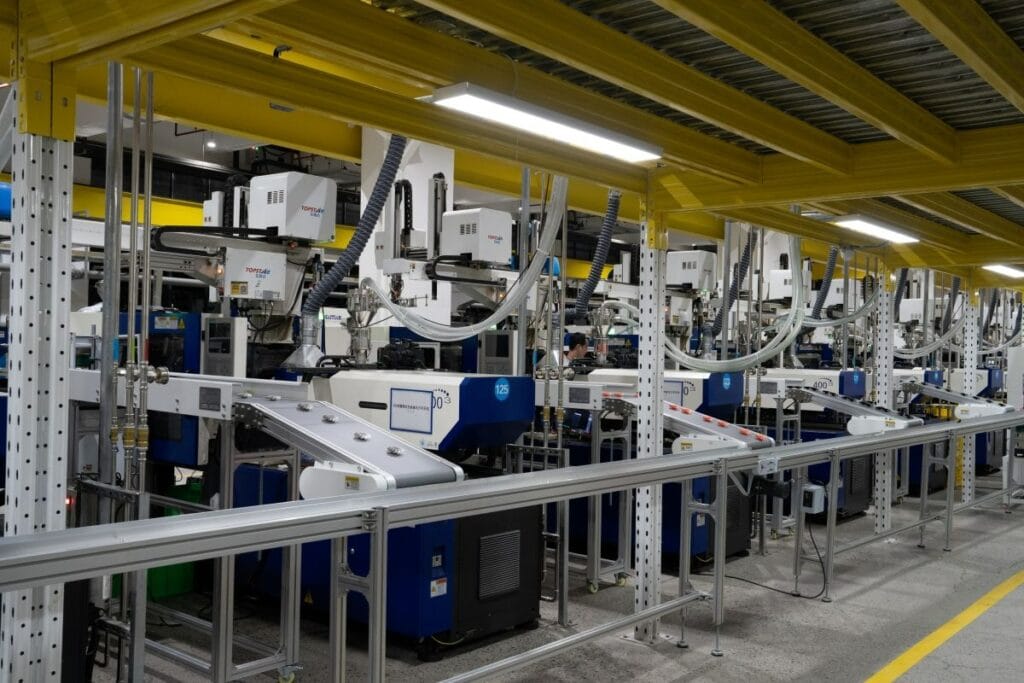
Quality in plastic parts production is non-negotiable because failures cascade across the entire value chain. A dimensionally inaccurate housing or a structurally weak clip doesn’t just waste material—it halts assembly lines, inflates warranty costs, and erodes consumer trust in the brand.
For procurement managers, the financial exposure from a single batch of defective parts can dwarf the savings gained from selecting a lower-cost supplier. Beyond cost, safety-critical applications demand zero-defect standards where material integrity and dimensional accuracy are matters of regulatory compliance.
The key quality metrics that procurement teams should track include dimensional tolerance adherence, surface finish consistency, material melt flow index stability, part weight variation, and defect rates such as sink marks, flash, or short shots. Establishing these metrics early creates a shared language between buyers and suppliers, forming the baseline against which every production run is measured.
Streamlining Supplier Coordination for Efficient Plastic Parts Production
Managing multiple suppliers in plastic parts production creates friction that directly threatens quality outcomes. Procurement managers frequently contend with misaligned delivery schedules, inconsistent material sourcing, conflicting quality interpretations, and communication gaps that compound when suppliers operate across different time zones and languages.
Without deliberate coordination frameworks, these challenges produce batch-to-batch variability that undermines the consistency OEM customers demand.
The first step toward streamlined coordination is implementing standardized communication protocols. Every supplier in the network should receive identical specification documents, quality expectation briefs, and change-order procedures.
When a design revision occurs, a centralized notification system ensures all parties update simultaneously rather than working from outdated drawings. Establishing clear roles and responsibilities—defining who approves material substitutions, who signs off on first-article inspections, and who escalates non-conformances eliminates ambiguity that leads to finger-pointing when defects emerge.
Beyond documentation, procurement teams should institute regular cadence meetings with tiered suppliers, structured around standardized KPI dashboards that track reject rates, on-time delivery, and corrective action closure timelines. This creates accountability and surfaces problems before they escalate into production stoppages.
Leveraging Technology for Supplier Management
Digital platforms transform supplier coordination from reactive firefighting into proactive quality management. Enterprise Resource Planning systems and Supply Chain Management platforms provide real-time visibility into production status, material traceability, and quality inspection results across the entire supplier network.
When a molder logs inspection data directly into a shared system, procurement managers can identify trending defects a gradually increasing part weight, for instance before tolerances are breached. Cloud-based collaboration tools also centralize document control, ensuring every supplier accesses current revision levels of CAD files, material specifications, and approved process parameters without relying on email chains that inevitably create version confusion.
Implementing Robust Quality Assurance Across All Suppliers
Ensuring reliable quality across a diverse supplier base requires more than periodic inspections—it demands a systematic framework that embeds quality expectations into every phase of production. For procurement managers overseeing plastic parts production, the goal is building a quality assurance infrastructure that functions consistently regardless of which supplier manufactures a given component.
The process begins with developing comprehensive quality specifications that leave no room for interpretation. These documents should detail exact dimensional tolerances, acceptable cosmetic standards with visual reference samples, material certifications required for each resin grade, and testing protocols for mechanical properties like tensile strength or impact resistance.
When every supplier works from identical, unambiguous specifications, the foundation for consistency is established before a single pellet enters a barrel. Pre-production audits represent the next critical layer.
Before awarding production volumes, procurement teams should verify that a supplier’s equipment capability matches the part’s complexity, that their quality management system is functioning rather than merely documented, and that their workforce understands the specific requirements of the project.
This investment in upfront verification prevents the far costlier discovery of capability gaps during full-rate production.
Continuous monitoring systems then sustain quality throughout the production lifecycle. Statistical process control charts tracking critical dimensions in real time, automated vision systems flagging surface defects, and regular assembly inspection protocols where molded components are test-fitted into mating parts—all these mechanisms catch drift before it becomes deviation.
Assembly inspection is particularly valuable because it validates functional performance in context, revealing issues like warpage or tolerance stack-up that single-part measurements might miss.
Key Steps for Effective Quality Audits
Effective quality audits follow a structured sequence that balances thoroughness with practical efficiency. Start with on-site facility inspections that assess machine condition, environmental controls such as temperature and humidity management in material storage areas, and housekeeping standards that reflect operational discipline.
Next, conduct a documentation review covering calibration records for measurement equipment, material lot traceability logs, and corrective action histories that reveal whether a supplier learns from past failures or repeats them. Finally, perform performance benchmarking by comparing the supplier’s defect rates, cycle time consistency, and first-pass yield against industry standards and your top-performing suppliers.
This benchmarking identifies not only underperformers requiring intervention but also best practices that can be shared across the supplier network to elevate overall plastic parts production quality.
Optimizing Contract Manufacturing for Consistent Quality
Contract manufacturing services offer procurement managers a powerful mechanism to centralize quality control rather than distributing it across fragmented supplier relationships.
By consolidating plastic parts production under a contract manufacturer with dedicated injection molding expertise, companies gain access to specialized process engineers who understand the nuances of gate design, cooling optimization, and material behavior knowledge that general-purpose suppliers often lack.
This expertise translates directly into fewer defects, tighter process windows, and more predictable output quality.
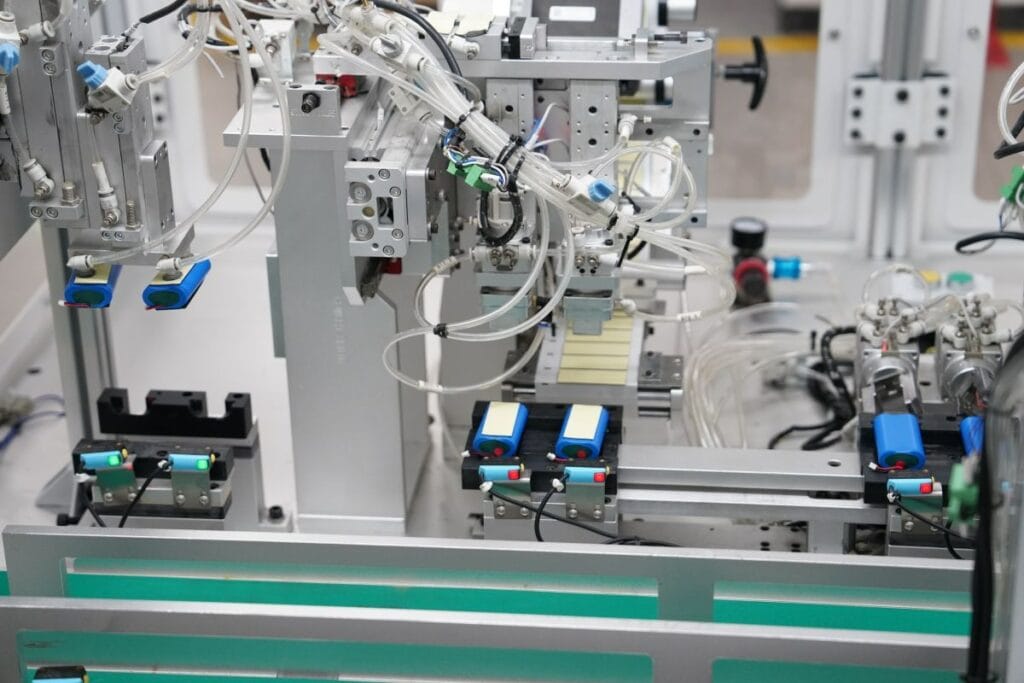
The structural advantage of contract manufacturing lies in standardized processes applied uniformly across production runs.
A capable contract manufacturer maintains validated process parameters, documented work instructions, and calibrated equipment under a single quality management system, eliminating the variability that emerges when identical parts are sourced from multiple facilities with different operational cultures.
Manufacturers like WEILAN MFG exemplify this approach by integrating comprehensive quality management systems with specialized injection molding expertise, providing procurement teams with consolidated accountability and reduced coordination overhead.
When selecting a contract manufacturing partner, procurement managers should evaluate not only technical capability but also the manufacturer’s willingness to integrate into existing quality reporting structures, share real-time production data, and participate in continuous improvement initiatives.
The right partner functions as an extension of the OEM’s quality organization rather than an arm’s-length vendor, creating alignment that sustains consistent plastic parts production over the long term.
Navigating Global Supply Chain Complexities for Quality Assurance
Operating a global supply chain for plastic parts production introduces quality challenges that domestic sourcing rarely presents. Regional differences in manufacturing standards, regulatory frameworks, and material grading systems create inconsistencies that procurement managers must actively manage.
A resin grade certified under one country’s standards may not meet equivalent performance thresholds elsewhere, and testing methodologies can vary enough to produce conflicting quality assessments for identical parts.
Beyond material concerns, logistics handling across extended transit routes exposes molded components to temperature extremes, humidity fluctuations, and mechanical stress that degrade dimensional stability or surface quality before parts ever reach the receiving dock.
Addressing these complexities requires a multi-layered approach. First, procurement teams should map regulatory and standards requirements for every region in their supplier network, then develop unified specifications that meet or exceed the most stringent applicable standard eliminating ambiguity about which benchmark applies.
Second, logistics quality preservation demands packaging validation studies that simulate actual shipping conditions, ensuring parts arrive within specification after weeks in transit containers.
Desiccant requirements for hygroscopic materials, custom dunnage designs preventing part-to-part contact, and temperature-monitoring devices on critical shipments all serve as practical safeguards.
Building resilient supplier networks within the global supply chain means diversifying geographically while maintaining quality equivalence.
Qualifying backup suppliers in alternative regions—and conducting periodic parallel production runs to verify output consistency protects against disruption without sacrificing standards.
Procurement managers who invest in regional quality engineers or third-party inspection services stationed near supplier facilities gain local oversight that bridges time zone gaps and cultural differences, catching deviations at the source rather than discovering them upon arrival at final assembly locations.
Building a Quality-Driven Supply Chain for OEM Injection Molding Success
Ensuring quality in OEM plastic injection molding demands more than good intentions—it requires structured systems that align every participant in the supply chain around shared standards and measurable outcomes.
The procurement manager’s role has evolved from transactional purchasing to orchestrating quality across complex networks, where supplier coordination, rigorous auditing, and continuous monitoring determine whether plastic parts production meets the exacting demands of modern manufacturing.
The solutions outlined here form an interconnected framework: standardized specifications and digital tracking tools eliminate communication gaps between suppliers, while pre-production audits and statistical process controls catch deviations before they compound into costly failures.
Contract manufacturing partnerships offer a path to consolidate expertise and accountability under unified quality systems, reducing the coordination burden that fragments attention across too many vendors. For companies operating within a global supply chain, adapting to regional standards and investing in local quality oversight bridges the gaps that distance and cultural differences create.
Procurement professionals who commit to these practices build more than compliant supply chains—they build competitive advantages. Consistent quality reduces scrap, accelerates time-to-market, strengthens customer confidence, and ultimately protects margins that erode quickly when defects escape into the field. The investment in robust quality infrastructure pays dividends across every production cycle.

Pradeep Sharma is a author the mind behind Techjustify, where I craft insightful blogs on technology, digital tools, gaming, AI, and beyond. With years of experience in digital marketing and a passion for tech innovation, I aim to simplify complex topics for readers worldwide.
My mission is to empower individuals with practical knowledge and up-to-date insights, helping them make informed decisions in the ever-evolving digital landscape.